Sunday, June 26, 2022

National Hunting and Fishing Day 2022

This year's National Hunting and Fishing (NHF) Day will be celebrated on September 24, 2022. On NHF Day, sports enthusiasts commemorate the tradition of hunting, target shooting, and fishing with national, state, regional and local organizations hosting related events.

Recognized on the fourth Saturday of every September, National Hunting and Fishing Day serves as a reminder to the American public that wildlife and wild places exist today thanks to the ongoing leadership and funding from hunters, anglers, and shooters.

Hunting and fishing play a large role in funding conservation efforts that also fuel economic prosperity, with more than 50 million Americans hunting and fishing every year, creating over $200 billion in economic activity and supporting over 1.5 million jobs. 

National Hunting and Fishing Day was formalized by Congress in 1971 to convey the message that conservation in America succeeds because of hunters and anglers.

In 1972, Richard Nixon signed the first ever Presidential proclamation of National Hunting and Fishing Day, writing, "I urge all citizens to join with outdoor sportsmen in the wise use of our natural resources and in insuring their proper management for the benefit of future generations.".

Johnny Morris’ Wonders of Wildlife National Museum and Aquarium serves as the officially recognized home of National Hunting and Fishing Day.

Located in Springfield, Missouri, within a day’s drive of more than half of all Americans, the not-for-profit institution celebrates those who hunt, fish, and act as stewards of the land and water.

American outdoorsmen and women support conservation projects through a conservation system funded by outdoor sports-related fees and excise taxes.

National Hunting and Fishing Day is made possible through the sponsorship and generous support of the conservation organizations Congressional Sportsmen’s Foundation, Ducks Unlimited, Izaak Walton League, National Shooting Sports Foundation, and Wonders of Wildlife.

For additional information about this year’s festivities or to get involved, visit www.NHFDay.org.

Tuesday, June 14, 2022

North Dakota Mule Deer Survey 2022

mule deer buck winter
Mule Deer
In May 2022, the North Dakota Game and Fish  Department (NDGFD) completed its annual spring mule deer survey.

Results of the survey indicate western North Dakota’s mule deer population is 13% higher than last year and 34% above the long-term average.

Biologists counted 2,923 mule deer in 298.8 square miles during this year’s survey. The overall mule deer density in the badlands was 9.8 deer per square mile.

According to big game management supervisor Bruce Stillings, the 2022 spring survey was the longest on record due to two April blizzards. The blizzards produced approximately 40 inches of snow with high winds and low temperatures.

The spring mule deer survey is used to assess mule deer abundance in the badlands. It is conducted after the snow has melted and before trees begin to leaf out, providing the best conditions for aerial observation of deer. Biologists have completed aerial surveys of the same 24 study areas since the 1950s.

Mule Deer Facts

Mule average about 39 inches at the shoulder.

Bucks weigh from 125 to 330 pounds.

Does weigh 110 to 210 pounds.

Mule deer are reddish-brown in summer and blue-gray in winter, with white throat, belly and rump patch. Their tails are slender and white, with a black tip.

Mule deer bucks have antlers. Main beams divide into nearly equal branches, and may divide again to form four or more tines on each side.

Mule deer tracks are slightly larger in front with a walking stride of 15 to 25 inches.

Preferred habitats include brush plains, shortgrass prairie; they are often associated with buttes, badlands, and rough terrain.

Mule deer feed on a variety of trees, shrubs, and forbs including green ash, aspen, sweetclover, and sagebrush. When available, they also eat grass species, alfalfa, and other agricultural crops.

Their primarily range includes the badlands adjacent to the Little Missouri River. Secondary range extending north and east to the breaks along the Missouri River.

Breeding peaks in mid-November, with bucks tending one doe at a time. No permanent pair bonds.

The gestation period of mule deer is around 204 days.

One to three fawns are born late May to late June and weigh about 8 pounds. Fawns have a reddish-brown coat with white spots on back.

Mule deer are most active at dawn and dusk. Does often socialize in small groups with related females from several generations. Outside of the breeding season, bucks usually alone or in small bachelor groups.

When alarmed, mule deer often flee with a bouncing gait called “stotting.” 

Mule deer got their name because of their large ears.

source: North Dakota Game and Fish Department

Friday, November 26, 2021

Waterfowl Hunting Gifts

wild ducks resting
Wild Ducks Resting

This article provides gift ideas for waterfowl hunting enthusiasts. Discussed in this segment are products related to duck hunting, goose hunting, and similar activities.

Waterfowl hunting theme gift ideas include such items as decoys, carvings, sculptures, photos, posters, duck stamp prints, field guides, calendars, stickers, coffee mugs, dvds, t shirts,sweatshirts, hats, and other apparel.

Buying hunting gifts online is fast and easy. Most online shops that offer hunting accessories can ship items directly to the recipient.

Waterfowl related gifts are popular for Christmas, Father's Day, birthdays, and other special occasions.

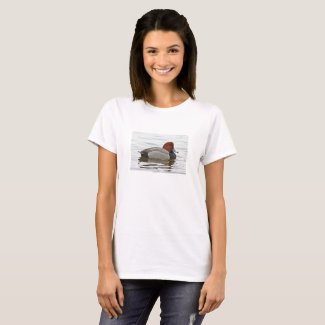
Waterfowl shirts are popular among hunters and other outdoor enthusiasts. Waterfowl hunters often choose apparel featuring their favorite species of duck, goose, or other waterfowl. Other shirts for hunters depict outdoor scenery, hunting dogs, or other images.

Custom t shirts, sweatshirts and other gifts suitable for duck hunters are offered at North America online store. This online shop offers a wide range of waterfowl art. Shoppers can choose to add a custom slogan, title or caption or purchase items without captioning.

The online store also offers a variety of outdoors theme wrapping paper. Waterfowl pattern wrapping paper works well for holidays, birthdays, or other occasions

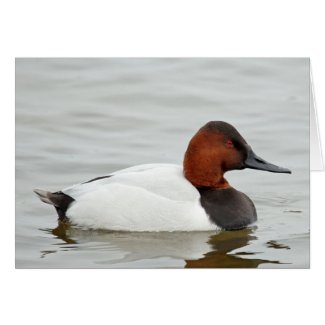
Waterfowl cards are another option to consider. Suitable for holiday correspondence or everyday use, cards are available with stunning photos of ducks, geese, and other waterfowl.

Tuesday, November 26, 2019

South Carolina White-tailed Deer Antler Records

white-tailed deer | credit: USFWS
In October, the South Carolina Department of Natural Resources (SCDNR) announced that the complete listing of South Carolina’s antler records is now available to the public online.

The South Carolina white-tailed deer Antler Records Program was initiated in the spring of 1974 and since that time, 7,469 sets of antlers (7,167 typical and 302 non-typical) have been officially entered into the list, according to Charles Ruth, Big Game Program Coordinator for SCDNR.

Initially, measuring sessions were only conducted a few times each spring but, since 1987 antler scoring sessions have been scheduled throughout the state with approximately 12 sessions occurring annually.

Each year, SCDNR wildlife biologists, wildlife technicians, and volunteers measure approximately 500 sets of antlers. Generally, only about 25% of the antlers that are measured make the Antler Records List.

The first Records of South Carolina White-tailed Deer was published in 1998. Since that time, updates included only the new entries for the current year and the top 100 typical and top 50 nontypical entries from the All-time List.

The new online publication represents the complete listing of all typical and nontypical entries on file through Spring 2019. It is only available on SCDNR’s website because the size of the document makes printed copies cost prohibitive.

The purpose of the Antler Records Program is twofold. First, because of the increased interest in deer hunting exhibited by sportsmen, it is a means of recognizing outstanding white-tailed deer taken in South Carolina.

Secondly, it provides management information that allows SCDNR wildlife biologists to identify areas that produce quality deer. When particular areas stand out it is important to attempt to recognize the underlying characteristics that produce outstanding animals.

Mr. Ruth explained, “Records are based on the Boone and Crockett Club scoring system, which measures the mass and symmetry of deer antlers in two categories—typical and non-typical. The scoring system is based primarily on antler size and symmetry and includes measurements of the main beams, greatest inside spread of the beams, circumference measurements at certain designated locations, and the number and length of the points. To be counted as a point, a projection must be at least one inch long and it must be longer than it is wide at its base.”

Deductions are made for points that arise abnormally from the main beams or from other points and for symmetrical differences between corresponding measurements on the right and left antlers.

For non-typical antlers, abnormal points are added to the score rather than being deducted as in the typical category.

A set of antlers is classified as typical or non-typical based on its general conformation, the number of abnormal points, and a determination as to whether it will rank higher in the typical or non-typical category.

Current minimum scores for the South Carolina Antler Records List are 125 typical points and 145 non-typical points.

All antlers must undergo a minimum 60-day drying period before they can be officially measured and a fair-chase statement must be signed for all hunter killed deer.

If a set of antlers meets the minimum score the record is added to the list and a certificate is issued recognizing the outstanding white-tailed deer taken in South Carolina.

source: South Carolina Department of Natural Resources

Monday, November 18, 2019

Vermont Deer Processing Videos: Field Dressing, Skinning, and Butchering

white tailed deer buck
white tailed deer
In Vermont, deer hunting is a way to harvest a sustainable, natural food source.

Making the most of the meals provided by deer taken in hunting seasons starts with processing them quickly and correctly.

To guide hunters, the Vermont Fish and Wildlife Department (VFWD) has three online videos demonstrating how to process deer.

Finding the videos is easy on the Fish and Wildlife website (www.vtfishandwildlife.com). Click on “Hunt” and then “From Field to Freezer.”

The educational videos are titled Field Dressing Your Deer, Skinning a Deer and Butchering a Deer.

“Correctly processing game can make a big difference in the taste of the meat,” said Nicole Meier, an information and education specialist with the department. “Taking the time to do it correctly assures that you and your family will have many enjoyable meals ahead.”

source: Vermont Fish and Wildlife Department

Tuesday, August 20, 2019

National Hunting and Fishing Day - NHF Day 2019

This year on September 28th, outdoorsmen will celebrate the 48th annual National Hunting and Fishing Day (NHF Day.).

Recognized on the fourth Saturday of every September, National Hunting and Fishing Day serves as a reminder to the American public that wildlife and wild places exist today thanks to the ongoing leadership and funding from hunters, anglers, and shooters.

Together, more than 34 million outdoorsmen and women keep the unique American conservation system strong by raising $100,000 every 30 minutes through self-imposed fees and excise taxes.

This groundbreaking model of conservation funding is recognized as the foundation that allows every American access to abundant wildlife and wild places to enjoy.

National Hunting and Fishing Day was formalized by Congress in 1971 to convey the message that conservation in America succeeds because of hunters and anglers.

In 1972, Richard Nixon signed the first ever Presidential proclamation of National Hunting and Fishing Day, writing, "I urge all citizens to join with outdoor sportsmen in the wise use of our natural resources and in insuring their proper management for the benefit of future generations.".

Johnny Morris’ Wonders of Wildlife National Museum and Aquarium serves as the officially recognized home of National Hunting and Fishing Day.

Located in Springfield, Missouri, within a day’s drive of more than half of all Americans, the not-for-profit institution celebrates those who hunt, fish, and act as stewards of the land and water.

National Hunting and Fishing Day is made possible through the sponsorship and generous support of the conservation organizations Congressional Sportsmen’s Foundation, Ducks Unlimited, Izaak Walton League, National Shooting Sports Foundation, and Wonders of Wildlife.

For additional information about this year’s festivities or to get involved, visit www.NHFDay.org.

Saturday, March 25, 2017

Moose Icons

The moose is one of the world's most iconic big game animals. Moose are known for their large antlers, unpredictable behavior, and ungainly appearance.

Always popular, moose are often depicted as icons. The following are examples of moose iconography:


Moose Facts

Moose occur in northern regions around the world.
In North America, moose are found throughout Canada and in several northern states of the USA.
The moose is the largest member of the deer family in North America.
Male moose are known as 'bulls' or 'bull moose'.
Females are known as 'cows'.
The plural form of moose is moose.

Wednesday, September 21, 2016

North Carolina Waterfowl Hunting Seminars

The North Carolina Wildlife Resources Commission (NCWRC) and Ducks Unlimited are offering seven waterfowl hunting seminars this fall.

The free seminars, which will be held from 6 to 9 p.m., are designed for new and experienced hunters. Topics will include waterfowl identification, hunting methods, decoys and calling, firearms and ammunition selection, specialty clothing, and bird cleaning and cooking.

Additional hunting information not covered in the seminar also will be available. Pre-registration is required and participants must register online. 

Seminars will be held in several North Carolina locations in October and November.

This is the first time the Commission has partnered with Ducks Unlimited to provide free waterfowl hunting seminars.

The seminars also provide a forum for Ducks Unlimited to promote its Sportsmen for Tomorrow program, according to Justin Aycock, the N.C. youth and education coordinator for the North Carolina chapter of Ducks Unlimited.

“Sportsmen for Tomorrow’s goal is to promote youth involvement in the outdoors and conservation,” said Aycock. “These seminars will engage a new generation of sportsmen, so that we can pass on the waterfowl hunting and conservation tradition.”

For more information on Ducks Unlimited, visit www.ducks.org.

For more information on the seminars, visit www.ncwildlife.org.

source:  North Carolina Wildlife Resources Commission

Tuesday, December 15, 2015

2016-17 USA Game Bird Hunting Seasons

In December, the U.S. Fish and Wildlife Service (USFWS) announced it is proposing continued liberal game bird season lengths and bag limits for the 2016-17 hunting seasons.

Each year, USFWS works in partnership with states from four Flyway Councils (Pacific, Central, Mississippi and Atlantic) to establish regulatory frameworks for hunting season lengths, dates and bag limits. States select their individual seasons from within the federal frameworks.

The announcement can be viewed at http://www.fws.gov/home/feature/2015/pdfs/Proposed-frameworks-2016.pdf.

USFWS publishes migratory game bird regulations each year in the Federal Register.

source: U.S. Fish and Wildlife Service

Sunday, November 29, 2015

Delaware Hunting Photo Contest

Photos of hunters pursuing their favorite quarry will be showcased in the Delaware Division of Fish & Wildlife’s 2015/16 Delaware Hunting Photo Contest.

The winning photo will be featured on the cover or inside of the 2016/2017 Delaware Hunting and Trapping Guide to be published next year.

A judging panel will be looking for photos that best portray this year’s contest theme, “Hunters in Action.” Judges also will look at technical criteria including resolution, clarity and composition.

The contest is open to Delaware residents of all ages, with a maximum of three entries per person. To be eligible, photographs must have been taken in Delaware.

For more information, please visit the Fish & Wildlife photo contest page on the DNREC website.

source: Delaware - DNREC Division of Fish and Wildlife

Thursday, September 24, 2015

National Hunting and Fishing Day 2015

National Hunting and Fishing Day (NHF Day) will be held Saturday, Sept. 26, 2015. Formalized by Congress in 1971, National Hunting and Fishing Day was created by the National Shooting Sports Foundation to celebrate the conservation successes of America’s hunters and anglers.

A wide range of NHF Day events are held annually throughout the USA.

For more information, visit www.nhfday.org 

Tuesday, April 1, 2014

USA National Wildlife Refuge Hunting Opportunities

In March, U.S. Fish and Wildlife Service (USFWS) officals announced that the agency will expand hunting and fishing opportunities throughout the National Wildlife Refuge System, opening up new hunting programs on six refuges and expanding existing hunting and fishing programs on another 20 refuges.

The rule also modifies existing refuge-specific regulations for more than 75 additional refuges and wetland management districts.

Under the National Wildlife Refuge System Improvement Act of 1997, the Service can permit hunting and fishing where they are compatible with the refuge’s purpose and mission. Hunting, within specified limits, is permitted on more than 335 wildlife refuges. Fishing is permitted on more than 271 wildlife refuges.


The following refuges will allow hunting for the first time:

New York

Shawangunk Grasslands National Wildlife Refuge

Oregon

Baskett Slough National Wildlife Refuge
Nestucca Bay National Wildlife Refuge
Siletz Bay National Wildlife Refuge

Pennsylvania

Cherry Valley National Wildlife Refuge

Wyoming

Cokeville Meadows National Wildlife Refuge


USFWS is expanding hunting on the following refuges:

California

Colusa National Wildlife Refuge

Florida

Arthur R. Marshall Loxahatchee National Wildlife Refuge
St. Marks National Wildlife Refuge

Idaho

Kootenai National Wildlife Refuge

Illinois

Cypress Creek National Wildlife Refuge
Middle Mississippi River National Wildlife Refuge

Indiana

Patoka River National Wildlife Refuge and Management Area

Iowa

Neal Smith National Wildlife Refuge
Northern Tallgrass Prairie National Wildlife Refuge
Port Louisa National Wildlife Refuge

Maine

Rachel Carson National Wildlife Refuge

Missouri

Mingo National Wildlife Refuge

New Mexico

San Andres National Wildlife Refuge

Oregon

Bandon Marsh National Wildlife Refuge
Julia Butler Hanson Refuge for the Columbian White-Tailed Deer (OR and WA)
Malheur National Wildlife Refuge

Texas

Aransas National Wildlife Refuge
Balcones Canyonlands National Wildlife Refuge

Vermont

Silvio O. Conte National Fish and Wildlife Refuge

Washington

Willapa National Wildlife Refuge

To view a complete list of all hunting/sport fishing opportunities on refuges, please visit the following guides: http://www.fws.gov/refuges/hunting/ and http://www.fws.gov/refuges/fishingguide/.

source: U.S. Fish and Wildlife Service

Saturday, March 1, 2014

2014 Vermont Spring Snow Goose Season

In Vermont, a special spring season will open for snow geese as a result of a special management action referred to as a “Conservation Order” allowed by the U.S. Fish and Wildlife Service and adopted by the Vermont Fish and Wildlife Board.

The measure was adopted at the recommendation of federal and state wildlife scientists in response to concerns about a growing number of snow geese across North America.

Eight states in the Atlantic Flyway (Delaware, Maryland, New Jersey, New York, North Carolina, Pennsylvania, Virginia, and Vermont) will hold a Spring Snow Goose Conservation Order in 2014.

The Vermont 2014 Spring Snow Goose Conservation Order will occur statewide from March 11 through April 25. A 2014 Spring Snow Goose Harvest Permit is required and is available at no charge on the Vermont Fish & Wildlife Department’s website (vtfishandwildlife.com). Hunters may also call the Essex Junction Office (802-878-1564) to request a permit.

In addition to this permit, hunters will need a 2014 Vermont hunting license, 2014 Harvest Information Program (HIP) certification, a 2013 federal migratory hunting stamp, and a 2014 Vermont migratory waterfowl stamp.

Hunters can register with the Harvest Information Program by going to the Vermont Fish & Wildlife Department website or by calling toll free 1-877-306-7091 during normal business hours.

Hunters who obtain a permit will be required to complete an online survey after April 25 and prior to May 16, 2014, whether they hunted or not. Hunters without access to the internet may obtain a copy of the survey by calling 802-878-1564.

According to Vermont Fish & Wildlife, snow geese typically move through the Champlain Valley in late March and early April. 

source: Vermont Fish & Wildlife Department

Thursday, February 20, 2014

Maryland Sika Deer Hunting

Maryland is one of several states where opportunities exist for sika deer hunting. During the 2013-2014 Maryland hunting season, hunters harvested 2701 sika deer (1,116 antlered and 1,585 antlerless).

2013-2014 Maryland sika deer harvest summary by county:

County        sika deer harvested

Caroline        3
Dorchester        2555
Somerset        10
Worcester        57

source: Maryland Department of Natural Resources

Friday, February 14, 2014

New Jersey Spring Light (Snow) Goose Conservation Order

The NJDEP Division of Fish and Wildlife recently announced that the agency will implement a Conservation Order (CO) in New Jersey for light geese during the winter/spring of 2014.

Conservation Order Dates: February 17 - April 5, 2014, except Sundays.

CO participants can obtain a permit through the Division's license web site at www.nj.wildlifelicense.com/.

Hunters who do not have internet access can have a permit mailed to them.

Best Areas in New Jersey for Snow Geese

1. Delaware Bay tidal marshes and nearby inland farm fields contain the most light geese. Nearly 100,000 light geese are estimated in these areas during the Mid-Winter Waterfowl Survey in early January.

2. Considerable numbers of light geese can be found in central New Jersey. Flocks in this region range far and wide and are usually found in an area from Cranbury to Roosevelt to Wrightstown to Burlington.

Central New Jersey flocks typically total 5-10 thousand birds. Generally, these birds are found field feeding on private farms necessitating obtaining landowner permission for access.

3. Light geese are found in the northern part of the state centered on Merrill Creek Reservoir near Phillipsburg. Merrill Creek is used primarily as a roosting and loafing site; the reservoir itself is not open to waterfowl hunting. These flocks range far and wide on a daily basis and are usually found from Belvidere to Washington to Clinton to Flemington.

Northern flocks typically exceed 15,000 birds in January and can build to over 75,000 birds in late winter. Most of these flocks are also found on private farms.

4. Light geese can be found in and around Forsythe National Wildlife Refuge in Oceanville. Mean Mid-Winter Waterfowl Survey counts from early January are typically about 5,000 birds in this region.

The Division administers a wide range of public land as Wildlife Management Areas (WMAs). Key WMAs for spring light geese include (from south to north): Dennis Creek, Heislerville, Egg Island, Fortescue, Nantuxent, New Sweden, Dix and Mad Horse Creek. A list of WMAs and maps can be found at www.njfishandwildlife.com/wmaland.htm.

Light Goose Hunting Information

The Atlantic Flyway Council offers a booklet, Successful Hunting Tactics for Greater Snow Geese that includes hunting tactics to help boost success when hunting light geese.

Also, a light goose cookbook with many recipes and hunting tips can be found at:

www.agjv.ca/images/stories/pdf/snowgoosecookbook.pdf.

source: NJDEP Division of Fish and Wildlife

Saturday, December 14, 2013

Hypothermia Risks of Waterfowl Hunting

During the winter season, waterfowl hunters across North America face a variety of risks associated with hypothermia.

“Statistics show more waterfowl hunters die from hypothermia and drowning than gunshot wounds,” said Maj. Chris Huebner, North Carolina's state boating safety coordinator. “Hypothermia is the loss of body heat and, left untreated, can prove fatal. Exposure to extreme cold, such as being in cold water or wearing wet clothes in cold conditions, can increase the chance of hypothermia.”

To help waterfowl hunters who use boats to practice both boating safety and hunting safety, the North Carolina Wildlife Resources Commission recently launched its Home From The Hunt™ campaign.

For more information, visit: www.ncwildlife.org

source: North Carolina Wildlife Resources Commission

2013 New Jersey Pheasant Stocking

The New Jersey DEP Division of Fish and Wildlife has announced that the extra pheasants are available because the Rockport Pheasant Farm in Warren County achieved better than anticipated production in the brooder houses and in the range pens this summer.

Wildlife Management Areas (WMAs) scheduled for stocking on Tuesday, November 26, will each receive a portion of an additional 770 pheasants.

The additional birds are in addition to the 53,000 pheasants previously scheduled for the Small Game Season and the 1,090 already stocked for the Youth Pheasant Hunting Day on November 2.

Hunters can view the 2013 Division of Fish and Wildlife Pheasant Quail Stocking Schedule at:

www.njfishandwildlife.com/pdf/2013/pheas-quail_sched13.pdf.

source: NJDEP Division of Fish and Wildlife

Monday, October 14, 2013

Georgia State Record Alligator

In September, Georgia hunter Jim Overman, age 43, harvested a new state record alligator at Lake Seminole.

According to the Georgia Department of Natural Resources’ Wildlife Resources Division, the 13-foot, 10 ¾-inch gator beats the former record by 1 ¾ inches.

After extensive restoration efforts, American alligators (Alligator mississippiensis) now flourish over most of their historic range. Georgia's alligator population is managed through a regulated hunting season.

For information on alligator hunting in Georgia, visit www.georgiawildlife.com.

source: Georgia Department of Natural Resources

Friday, October 11, 2013

Mississippi Wild Turkey Brood Survey

Each year from June to August, the Mississippi Department of Wildlife, Fisheries, and Parks (MDWFP) conducts a survey to monitor wild turkey reproduction across the state. The "brood survey", as it is commonly known, enlists numerous observers who note all turkeys seen during the three-month survey period.

The resulting information allows turkey biologists to measure reproductive success and gives hunters an objective look at how turkeys are faring across the Magnolia State.

Dave Godwin, the MDWFP Wild Turkey Program Coordinator, reports that the brood survey data indicates reduced turkey reproduction for much of the state during 2013. "We witnessed our best hatch in over a decade last summer, but unfortunately it was followed up with a decreased hatch in most areas this year," said Godwin.

According to Godwin, the proportion of hen wild turkeys observed with young in 2013 declined 43 percent from the previous year's tally, and the average brood size dropped substantially as well. 

Adam Butler, MDWFP Wild Turkey Program Biologist, suggests several factors that could be responsible for this year's decreased hatch.  "We had an unusual spring this year.  Springtime nesting activity seemed delayed as a result of the late winter and cool spring, and the later the birds get started nesting, the worse they tend to do," Butler said.

He also pointed out that untimely rains during the nesting and early brooding period likely had a negative impact. Another factor could be the abundant hatch of 2012, which may have skewed the population in favor of juvenile hens.

Research has shown that young hens tend to nest less frequently, and they are often not as successful.   

For more information regarding wild turkeys in Mississippi, visit www.mdwfp.com.

source: Mississippi Department of Wildlife, Fisheries, and Parks

Thursday, October 10, 2013

2013 Montana Elk Hunting

Montana's general, five-week long, elk hunting season opens Oct. 26. Overall, Montana's elk populations are in good shape, according to  Montana FWP.

Once again this season, Montana hunters will pursue elk under some very favorable regulations although the weather could play a big part in hunter success.

Depending on the hunting district regulations hunters can pursue brow-tined bull elk, spike bull elk, either-sex elk, or antlerless elk.

For more information on elk hunting in Montana, visit FWP's website at fwp.mt.gov.

source: Montana FWP