Showing posts with label waterfowl. Show all posts

Friday, November 26, 2021

Waterfowl Hunting Gifts

wild ducks resting
Wild Ducks Resting

This article provides gift ideas for waterfowl hunting enthusiasts. Discussed in this segment are products related to duck hunting, goose hunting, and similar activities.

Waterfowl hunting theme gift ideas include such items as decoys, carvings, sculptures, photos, posters, duck stamp prints, field guides, calendars, stickers, coffee mugs, dvds, t shirts,sweatshirts, hats, and other apparel.

Buying hunting gifts online is fast and easy. Most online shops that offer hunting accessories can ship items directly to the recipient.

Waterfowl related gifts are popular for Christmas, Father's Day, birthdays, and other special occasions.

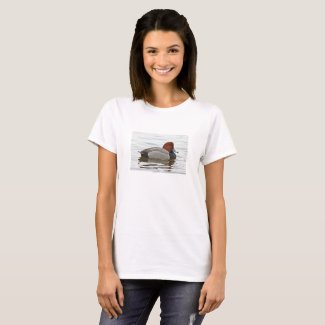
Waterfowl shirts are popular among hunters and other outdoor enthusiasts. Waterfowl hunters often choose apparel featuring their favorite species of duck, goose, or other waterfowl. Other shirts for hunters depict outdoor scenery, hunting dogs, or other images.

Custom t shirts, sweatshirts and other gifts suitable for duck hunters are offered at North America online store. This online shop offers a wide range of waterfowl art. Shoppers can choose to add a custom slogan, title or caption or purchase items without captioning.
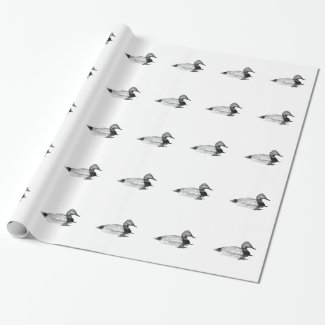
The online store also offers a variety of outdoors theme wrapping paper. Waterfowl pattern wrapping paper works well for holidays, birthdays, or other occasions
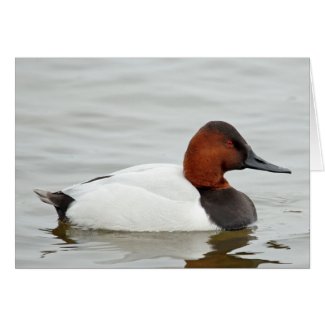
Waterfowl cards are another option to consider. Suitable for holiday correspondence or everyday use, cards are available with stunning photos of ducks, geese, and other waterfowl.

Tuesday, December 15, 2015

2016-17 USA Game Bird Hunting Seasons

In December, the U.S. Fish and Wildlife Service (USFWS) announced it is proposing continued liberal game bird season lengths and bag limits for the 2016-17 hunting seasons.

Each year, USFWS works in partnership with states from four Flyway Councils (Pacific, Central, Mississippi and Atlantic) to establish regulatory frameworks for hunting season lengths, dates and bag limits. States select their individual seasons from within the federal frameworks.

The announcement can be viewed at http://www.fws.gov/home/feature/2015/pdfs/Proposed-frameworks-2016.pdf.

USFWS publishes migratory game bird regulations each year in the Federal Register.

source: U.S. Fish and Wildlife Service

Saturday, March 1, 2014

2014 Vermont Spring Snow Goose Season

In Vermont, a special spring season will open for snow geese as a result of a special management action referred to as a “Conservation Order” allowed by the U.S. Fish and Wildlife Service and adopted by the Vermont Fish and Wildlife Board.

The measure was adopted at the recommendation of federal and state wildlife scientists in response to concerns about a growing number of snow geese across North America.

Eight states in the Atlantic Flyway (Delaware, Maryland, New Jersey, New York, North Carolina, Pennsylvania, Virginia, and Vermont) will hold a Spring Snow Goose Conservation Order in 2014.

The Vermont 2014 Spring Snow Goose Conservation Order will occur statewide from March 11 through April 25. A 2014 Spring Snow Goose Harvest Permit is required and is available at no charge on the Vermont Fish & Wildlife Department’s website (vtfishandwildlife.com). Hunters may also call the Essex Junction Office (802-878-1564) to request a permit.

In addition to this permit, hunters will need a 2014 Vermont hunting license, 2014 Harvest Information Program (HIP) certification, a 2013 federal migratory hunting stamp, and a 2014 Vermont migratory waterfowl stamp.

Hunters can register with the Harvest Information Program by going to the Vermont Fish & Wildlife Department website or by calling toll free 1-877-306-7091 during normal business hours.

Hunters who obtain a permit will be required to complete an online survey after April 25 and prior to May 16, 2014, whether they hunted or not. Hunters without access to the internet may obtain a copy of the survey by calling 802-878-1564.

According to Vermont Fish & Wildlife, snow geese typically move through the Champlain Valley in late March and early April. 

source: Vermont Fish & Wildlife Department

Friday, February 14, 2014

New Jersey Spring Light (Snow) Goose Conservation Order

The NJDEP Division of Fish and Wildlife recently announced that the agency will implement a Conservation Order (CO) in New Jersey for light geese during the winter/spring of 2014.

Conservation Order Dates: February 17 - April 5, 2014, except Sundays.

CO participants can obtain a permit through the Division's license web site at www.nj.wildlifelicense.com/.

Hunters who do not have internet access can have a permit mailed to them.

Best Areas in New Jersey for Snow Geese

1. Delaware Bay tidal marshes and nearby inland farm fields contain the most light geese. Nearly 100,000 light geese are estimated in these areas during the Mid-Winter Waterfowl Survey in early January.

2. Considerable numbers of light geese can be found in central New Jersey. Flocks in this region range far and wide and are usually found in an area from Cranbury to Roosevelt to Wrightstown to Burlington.

Central New Jersey flocks typically total 5-10 thousand birds. Generally, these birds are found field feeding on private farms necessitating obtaining landowner permission for access.

3. Light geese are found in the northern part of the state centered on Merrill Creek Reservoir near Phillipsburg. Merrill Creek is used primarily as a roosting and loafing site; the reservoir itself is not open to waterfowl hunting. These flocks range far and wide on a daily basis and are usually found from Belvidere to Washington to Clinton to Flemington.

Northern flocks typically exceed 15,000 birds in January and can build to over 75,000 birds in late winter. Most of these flocks are also found on private farms.

4. Light geese can be found in and around Forsythe National Wildlife Refuge in Oceanville. Mean Mid-Winter Waterfowl Survey counts from early January are typically about 5,000 birds in this region.

The Division administers a wide range of public land as Wildlife Management Areas (WMAs). Key WMAs for spring light geese include (from south to north): Dennis Creek, Heislerville, Egg Island, Fortescue, Nantuxent, New Sweden, Dix and Mad Horse Creek. A list of WMAs and maps can be found at www.njfishandwildlife.com/wmaland.htm.

Light Goose Hunting Information

The Atlantic Flyway Council offers a booklet, Successful Hunting Tactics for Greater Snow Geese that includes hunting tactics to help boost success when hunting light geese.

Also, a light goose cookbook with many recipes and hunting tips can be found at:

www.agjv.ca/images/stories/pdf/snowgoosecookbook.pdf.

source: NJDEP Division of Fish and Wildlife

Saturday, December 14, 2013

Hypothermia Risks of Waterfowl Hunting

During the winter season, waterfowl hunters across North America face a variety of risks associated with hypothermia.

“Statistics show more waterfowl hunters die from hypothermia and drowning than gunshot wounds,” said Maj. Chris Huebner, North Carolina's state boating safety coordinator. “Hypothermia is the loss of body heat and, left untreated, can prove fatal. Exposure to extreme cold, such as being in cold water or wearing wet clothes in cold conditions, can increase the chance of hypothermia.”

To help waterfowl hunters who use boats to practice both boating safety and hunting safety, the North Carolina Wildlife Resources Commission recently launched its Home From The Hunt™ campaign.

For more information, visit: www.ncwildlife.org

source: North Carolina Wildlife Resources Commission

Saturday, August 17, 2013

2013 USFWS Waterfowl Population Status Report

The U.S. Fish and Wildlife Service has released its most recent Waterfowl Population Status Report.

The report summarizes the status of duck, goose, and swan populations in North America for 2013.

The Waterfowl Population Status, 2013 Report can be downloaded at:

http://www.fws.gov/migratorybirds/NewReportsPublications/PopulationStatus/Waterfowl/StatusReport2013.pdf

source: U.S. Fish and Wildlife Service

Thursday, July 4, 2013

New York Special Snow Goose Harvest Program

State regulations to expand the special snow goose harvest program in New York have been amended to allow hunters to take snow geese during a special harvest program from January 16 through April 15 in all of upstate New York.

This is in addition to the regular snow goose hunting season, which is expected to run October 1 through January 15 annually. DEC filed a Notice of Emergency Adoption and Proposed Rule Making with the Department of State on January 23, 2013, and the changes took effect immediately. However, the Emergency rule expired in April, so adoption of the final rule was necessary to extend the same regulation indefinitely.

The expanded special season will increase hunter opportunity to harvest snow geese throughout the winter and early spring, when they are most abundant in New York.

Snow geese are an arctic breeding goose species that recently reached record high population levels in North America - from approximately 50,000 birds in the 1960s to more than one million birds in recent years.

Wildlife agencies, ecologists and environmental organizations have expressed concern about the impacts that overabundant snow geese are having on arctic ecosystems, coastal wetlands and agricultural crops. In response to those concerns, federal hunting regulations were liberalized in 2008, and the U.S. Fish and Wildlife Service (USFWS) adopted a conservation order allowing states in the Atlantic Flyway to implement special snow goose harvest programs in addition to its regular hunting seasons. Based on guidance from USFWS, DEC decided to have one continuous season beginning this year.

For more information about snow geese hunting in New York, visit the DEC website.

source: New York State Department of Environmental Conservation

Wednesday, July 20, 2011

Tennessee Wood Duck Box Program

Across North America, putting up wood duck boxes is a traditional way to help increase waterfowl populations.

An outstanding example of a wood duck box program is ongoing in Tennessee. During 2011, the Tennessee Wildlife Resources Agency, in partnership with Delta Waterfowl and the National Resources Conservation Service (NRCS) has been donating and installing and install wood duck boxes on lands where NRCS or districts have installed wildlife benefitting conservation practices.

Recently, more than 200 boxes built by Williamson County Boy and Cub scouts were distributed to Middle Tennessee landowners at an event at the NRCS Area II office in Murfreesboro. The Nashville chapter of Delta Waterfowl supplied materials and coordinated the construction.

The landowners who accept the donated boxes are only asked to respond once a year to Delta Waterfowl either via email or mail request regarding whether there appears to have been a wood duck nest in the box during the year. This will provide Delta Waterfowl with valuable habitat information that could be correlated to the success of the project.

Boxes are located in areas along streams and rivers that are in WRP easements and riparian buffer zones established through EQIP, CRP, CSP woodlands or stream corridors.

source: TWRA

Thursday, July 7, 2011

2011 Report on Trends in Duck Breeding Populations


Improved conditions in much of the waterfowl breeding habitat in Canada and the prairies of the north-central United States have contributed to higher populations of many species of ducks, according to breeding population estimates released by the U.S. Fish and Wildlife Service today.

The preliminary estimate of the total duck population from the traditional survey area (north-central United States, south-central and northern Canada, and Alaska) was 45.6 million birds. This estimate represents an 11 percent increase over last year’s estimate of 40.8 million birds and is 35 percent above the long-term average (the total duck estimate excludes scoters, eiders, long-tailed ducks, mergansers, and wood ducks).

The surveys are summarized in the 2011 Report on Trends in Duck Breeding Populations, which contains information about the status of duck populations and wetland habitats found during spring of 2011.

The surveys are conducted by the U.S. Fish and Wildlife Service and Canadian Wildlife Services’ Waterfowl Breeding Population and Habitat Survey, which involves sampling more than two million square miles of waterfowl habitat across the north-central and northeastern United States, south-central, eastern, and northern Canada, and Alaska. Information is not included from surveys conducted by state or provincial agencies.

The annual survey guides the Service’s waterfowl conservation programs under authority of the 1918 Migratory Bird Treaty Act. The Service works in partnership with state biologists from the four flyways — the Atlantic, Mississippi, Central and Pacific — to establish regulatory frameworks for waterfowl hunting season lengths, dates, and bag limits.

The entire Trends in Duck Breeding Populations, 1955-2011 report can be downloaded from the Service's Website at http://www.fws.gov/migratorybirds/

article source and photo credit: U.S. Fish and Wildlife Service

Monday, June 27, 2011

2011-2012 Federal Duck Stamps and Junior Duck Stamps

2011-2012 Federal Duck Stamps and Junior Duck Stamps are now available from the U.S. Fish and Wildlife Service.

The 2011-2012 Federal Duck Stamp features two white-fronted geese painted by artist James Hautman of Chaska, Minn.

All waterfowl hunters age 16 and older are required to purchase and carry a current Federal Duck Stamp. Additionally, conservationists, birders, stamp collectors and others buy the stamp as an investment in conservation.

Ninety-eight percent of proceeds from the $15 Duck Stamp go to the Migratory Bird Conservation Fund, which supports wetlands acquisition for the National Wildlife Refuge System.

The 2011-2012 Junior Duck Stamp was created by Abraham Hunter, 17, of Vienna, Ill. The Service sells the Junior Duck Stamp for $5 to stamp collectors, conservationists and the general public.  Proceeds from Junior Duck Stamp sales support environmental education efforts and awards for contest winners.

source: U.S. Fish and Wildlife Service

Monday, June 20, 2011

North American Waterfowl Hunting

Across North America, waterfowl hunting is one of the most popular outdoor activities. Hunting varies widely by region, with fields, marshes, flats, swamps and back bays just a few of the habitats where waterfowl hunting occurs. Waterfowl hunters hunt on public lands, tracts they own, or on leased hunting properties.

Hunting with a local guide is popular way to experience the sport of waterfowl hunting. Professional hunting guides provide areas to hunt, know local hunting patterns and are familiar with regulations. They usually provide boats, blinds, decoys and other essentials.

Some guides will set hunters up in a blind or other hunting spot, then return during the day to check on hunters and move them as conditions change. These hunts usually require retrievers to locate and bring in downed ducks, geese and other waterfowl.

After a successful hunt, hunters must choose how to clean and cook wild ducks or geese. Once harvested waterfowl has been cleaned and placed on ice, hunters usually relax and enjoy the last moments of daylight.

Tuesday, March 1, 2011

West Virginia Winter Waterfowl Survey

Wildlife biologists counted 5,044 ducks and 6,147 Canada geese during the annual mid-winter waterfowl survey in early January, according to Steve Wilson, Waterfowl Biologist for the Wildlife Resources Section of the West Virginia Division of Natural Resources.

The 10-year average has been artificially high since the record numbers in 2001. Now that the 2001 numbers are no longer included in the average, the percent above average figures for 2011 are more significant. The increase was not unexpected due to the amount of snow and cold weather that occurred in December.

Canada geese, mallards and black ducks were the most commonly observed species in the 2011 survey.  Other waterfowl observed included canvasback, scaup, ring-necked duck, redhead, bufflehead, wood duck, mergansers and snow geese. Thirteen bald eagles, two golden eagles and eleven unidentified eagles were also observed.

The survey was conducted on January 5, 6, and 7, 2011, and included portions of the Kanawha, Ohio, Shenandoah and New rivers as well as Tygart and Bluestone lakes.

source: West Virginia Division of Natural Resources

Monday, February 21, 2011

Signs of Spring


In the USA Mid Atlantic region, signs of Spring are everywhere. All along the Atlantic Flyway, snow geese are visibly restless. As each day grows longer, snow geese gather in ever-larger flocks to feed, becoming more and more restless throughout the day. Although they feed heavily, geese spend considerable time flying back and forth between feeding spots. As the days of February pass, their time in the region grows shorter.

Wild turkeys are also becoming much m ore visible. Large flocks are on the move and sightings in open fields are more common. Food supplies have been lean for some time, but even now turkeys are beginning to find a much wider selection of foods.

Deer behavior is also changing fast as March grows near. With the rut, hunting season and most of the harsh weather behind, deer are able to feed more consistently. During morning and evening, whitetails are often seen eating tree buds, early grasses and other vegetation.